From the car park
to your first shot
Walking into a room like this for the first time is mildly intimidating and it should not be. Nothing here is complicated, just unfamiliar. Here is the whole of it.
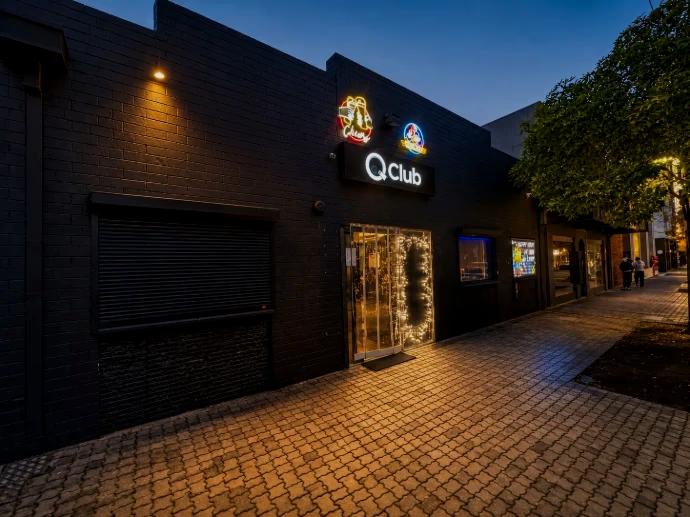
What happens, in order
In the car park
Decide Heyball or pool before you go in
It is the only decision that matters and it is much easier made outside than at a counter with somebody waiting. If anybody in your group has not played before, take pool. A Heyball table is twelve feet long with pockets that reject anything struck slightly wrong, and an hour on one can pass with very few balls going in.
Nobody will mind either way. Both are in the same building, the pool tables in their own room beside the Heyball room.
At the counter
Tell us which game, and roughly how long
A table is $18 an hour, Heyball or pool, charged per table and not per person. The clock starts when you break, not when you walk up to the counter, and it is counted to the quarter hour, rounded down.
Cues, a rest, a spider, chalk and balls are all included. A Heyball glove is $10 if you want one. Card and cash both work.
Walking to the table
Your table is the lit one
Every table has its own light raft. Whichever one has its lamp on is yours for the hour, and the rest of the room goes dark around it, which is the thing people who play in rooms like this actually come for. Cues are in racks on the wall; take one that feels heavy enough to swing itself and light enough to control.
The first ten minutes
Do not start a frame yet
Roll a few balls the length of the table. Pot some easy ones. If you are on Heyball, spend a minute just getting the cue ball to come back to you off the far cushion. The point is to find out how fast the cloth is before it matters.
Every experienced player in the room is doing exactly this at the start of their hour. Nobody is watching you.
During the hour
Sit down when it is not your shot
That is most of the etiquette. Stay out of your opponent’s line of sight, do not put a drink on the rail, and chalk the tip before anything you care about. If you need a rest or a spider to reach a ball, they are on the wall. Using one is not cheating and not a sign of weakness.
On the way out
Say when you are done
Rack your cue and tell somebody at the counter you have finished, rather than drifting out. The clock stops when you rack, and you pay then. Making the end of the session explicit is what keeps the bill from ever being an argument.
The one that catches people out
We do not serve alcohol, and that is by design. There is tea, coffee, cold drinks and hot food from the counter. Worth knowing before you plan an evening around it, and it is a large part of why the room is the way it is.